
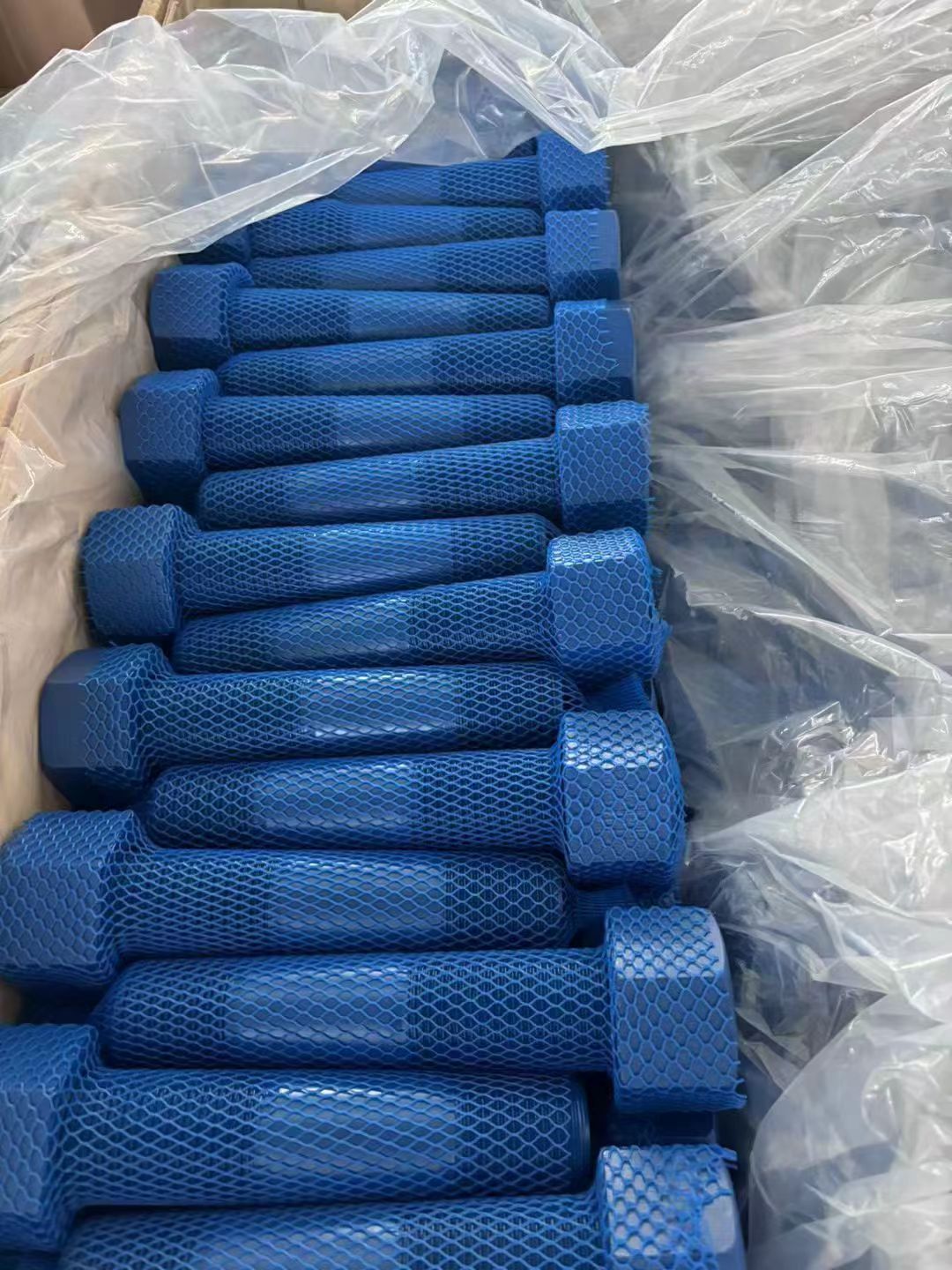
PFAS Regulations and PTFE Coatings: What This Means for Fastener Specifications
PFAS regulations are accelerating across the UK, EU, and the United States, placing increasing pressure on industrial applications that rely on fluoropolymer coatings.
For fastener manufacturers and engineering buyers, this raises a critical question: what happens to PTFE-coated fasteners?
PTFE has been widely used on bolts, anchors, and threaded components for its low friction, chemical resistance, and installation consistency. However, as part of the broader PFAS family, PTFE faces growing regulatory uncertainty—particularly in oil & gas, chemical processing, and infrastructure projects with long service-life requirements.
While PTFE is not universally banned today, many engineering companies are already moving toward PFAS-free specifications to reduce future compliance risk.
Several alternatives are now being evaluated in fastener applications:
• Zinc-based and zinc flake coatings
Commonly used on structural bolts and anchors, offering sacrificial corrosion protection and compatibility with established EN and ASTM standards.
• Ceramic or inorganic coatings
Naturally PFAS-free, with excellent wear resistance and thermal stability, suitable for high-load or harsh environmental conditions.
• Non-fluorinated polymer or silicone-based systems
Providing controlled friction and corrosion protection with a lower regulatory risk profile, though performance must be validated case by case.
For fasteners, the challenge is not simply corrosion resistance—it is maintaining consistent torque–tension behavior, durability, and long-term availability under evolving regulations.
Engineering teams reviewing fastener specifications today should consider not only current performance, but whether selected coatings will remain compliant and supported over the next decade.
Early testing, clear material documentation, and close supplier collaboration are becoming essential steps toward future-proof fastener design.